Have you ever wondered how a fire alarm system works? What are the crucial components that make it possible to detect and respond to fires quickly? Understanding the intricacies of a fire alarm system is vital for effective fire safety in any building. From sensors to control panels, each component plays a crucial role in ensuring the safety of occupants. So, let’s dive into the world of fire alarm system components and uncover the mysteries behind their functionality.
Fire Alarm Control Panel
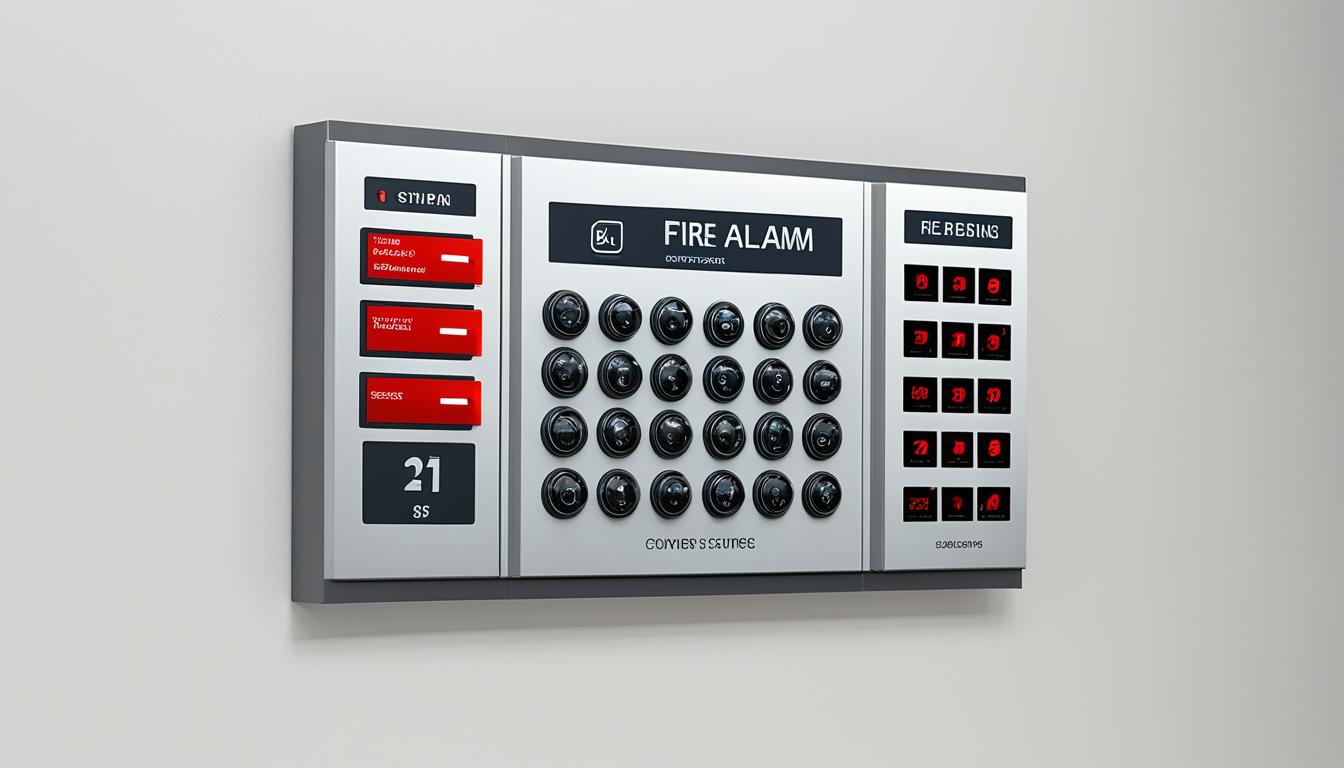
The fire alarm control panel (FACP) is the central component of a fire alarm system. It serves as the command center, receiving signals from initiation devices and executing various critical functions.
One of the primary roles of the FACP is to activate notification devices, such as strobe lights, horns, and alarms, to alert individuals in the vicinity of a potential fire or emergency. These notification devices play a crucial role in quickly notifying occupants and facilitating safe evacuation.
The FACP also has the capability to control elevator recall systems. In the event of a fire, the FACP can initiate an elevator recall, bringing all the elevators to a designated floor. This prevents individuals from inadvertently entering unsafe areas and ensures their safety during an evacuation.
Furthermore, the FACP is responsible for shutting down the HVAC (Heating, Ventilation, and Air Conditioning) system if smoke is detected in the building’s air ducts. This prevents the spread of smoke and fire to other parts of the building through the HVAC system, minimizing damage and ensuring the safety of occupants.
Perhaps one of the most critical roles of the FACP is its ability to minimize false alarms. False alarms not only cause inconvenience and disruption but also lead to complacency and decreased responsiveness among building occupants. The FACP achieves this by ensuring proper system design, installation, testing, maintenance, and inspection. By implementing robust false alarm reduction strategies, the FACP significantly reduces the occurrence of false alarms, enhancing the reliability and effectiveness of the fire alarm system.
The fire alarm control panel comes in different types, including addressable and non-addressable systems. Addressable systems provide the advantage of pinpointing the exact location of an emergency, aiding first responders in their response. Non-addressable systems, on the other hand, are more straightforward and cost-effective for smaller buildings.
The fire alarm control panel is the heart of a fire alarm system, orchestrating its various components to ensure the safety of building occupants. Its role in activating notification devices, controlling elevator recall, managing HVAC shutdown, and minimizing false alarms is vital for effective emergency response.
| Key Functions | Description |
|---|---|
| Activation of Notification Devices | Turns on strobe lights, horns, and alarms to alert individuals during emergencies. |
| Elevator Recall | Recalls elevators to a designated floor to prevent individuals from entering hazardous areas. |
| HVAC Shutdown | Shuts down the HVAC system if smoke is detected in air ducts to prevent the spread of smoke and fire. |
| Minimizing False Alarms | Ensures proper system design, installation, testing, maintenance, and inspection to reduce false alarm occurrences. |
Initiation Devices
In the event of an emergency, initiation devices play a crucial role in activating the fire alarm system. These devices are designed to detect and initiate the alarm when specific conditions are met. There are two main types of initiation devices: manual pull stations and automatic initiation devices.
Manual Pull Stations
Manual pull stations, also known as fire alarm call points, require individuals to physically initiate the alarm by activating a lever or breaking a glass. These devices are strategically placed throughout a building to provide convenient access in case of an emergency. Once activated, they immediately trigger the fire alarm system, alerting building occupants and emergency responders.
Automatic Initiation Devices
Automatic initiation devices provide an alternative method of activating the fire alarm system. Unlike manual pull stations, these devices automatically detect certain environmental changes or hazards associated with a fire. The most common types of automatic initiation devices used in fire alarm systems are smoke detectors and heat detectors.
Smoke detectors sense the presence of smoke particles in the air and can detect a fire in its early stages before it becomes fully developed. Heat detectors, on the other hand, monitor increases in temperature and are particularly effective in areas where smoke may not be present or where the environment may generate false alarms.
Both smoke detectors and heat detectors can be either addressable or non-addressable. Addressable devices provide the exact location of the emergency, which is valuable information for emergency responders. Non-addressable devices, on the other hand, activate the alarm system but do not provide the specific location of the incident.
Example of Automatic Initiation Devices
“The integration of smoke detectors and heat detectors in our fire alarm system has significantly enhanced the level of safety in our facility. These automatic initiation devices allow us to quickly detect and respond to potential fire hazards, ensuring the well-being of our employees.”
– Sarah Thompson, Facility Manager
The selection of initiation devices depends on the specific needs of the building and its occupants. Factors such as occupancy type, building layout, and potential fire hazards influence the choice of initiation devices to ensure an effective and reliable fire alarm system.
In the next section, we will explore the role of notification devices and power supply in a fire alarm system.
Notification Devices and Power Supply
In the event of a fire or emergency, notification devices play a critical role in alerting occupants and ensuring their safety. These devices encompass a range of options, including strobe lights, alarms, bells, horns, sirens, and chimes. Designed to provide both visual and auditory cues, notification devices effectively grab attention and prompt immediate action in the event of a fire. They can also be equipped with pre-recorded instructions to guide individuals in a safe evacuation.
A reliable fire alarm system relies not only on effective notification devices but also on a robust power supply. The primary power supply for the system is typically sourced from the local power company, ensuring continuous operation under normal circumstances. However, considering the possibility of power outages during emergencies, a backup power supply is imperative. This backup power supply consists of batteries that take over in the event of a power failure, ensuring uninterrupted performance of the fire alarm system when it matters the most.
In summary, notification devices are essential components of a fire alarm system, providing prominent visual and auditory alerts for immediate response during emergencies. The inclusion of strobe lights, alarms, and other notification devices heightens awareness and facilitates a swift evacuation process. Additionally, the primary power supply, reinforced by a backup power supply, guarantees the fire alarm system’s reliability, ensuring continuous operation during power outages and critical situations.
FAQ
What are the components of a fire alarm system?
The components of a fire alarm system include fire alarm devices, sensors, the fire alarm control panel, and the fire alarm annunciator panel.
What is the function of the fire alarm control panel?
The fire alarm control panel serves as the central component of a fire alarm system. It receives signals from initiation devices, turns on notification devices, recalls elevators, shuts down HVAC systems, and notifies an alarm monitoring center.
What are initiation devices in a fire alarm system?
Initiation devices are responsible for activating the fire alarm system in an emergency. These can be manual pull stations or automatic devices like smoke detectors and heat detectors.
What are notification devices in a fire alarm system?
Notification devices are used to alert building occupants in the event of a fire or emergency. These devices can include strobe lights, alarms, bells, horns, sirens, and chimes.
What is the power supply for a fire alarm system?
A fire alarm system requires both a primary power supply and a backup power supply. The primary power supply comes from the local power company, while the backup power supply consists of batteries to ensure the system functions during a power outage.