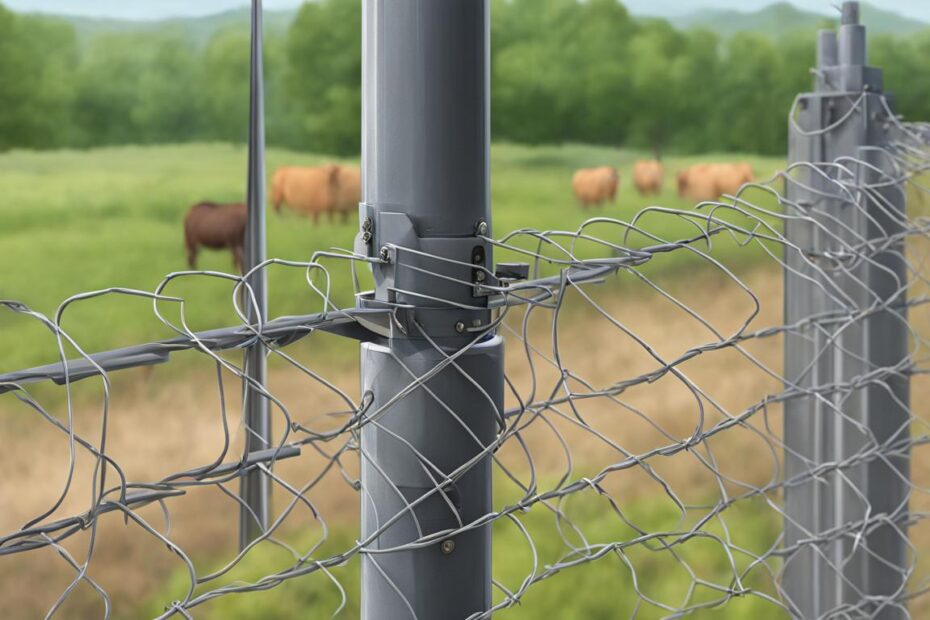
Are your electric fences vulnerable to lightning strikes? Don’t let storms put your livestock, farm, or ranch at risk. Lightning damage can result in costly repairs, harm to your animals, and even potential property destruction. Protecting your electric fences with lightning arresters is crucial for ensuring the safety of your livestock and property.
Key Takeaways:
- Lightning strikes can cause damage to valuable electronics, harm livestock, and destroy property.
- Installing lightning arresters between the fence and the controller is recommended to safeguard electric fences.
- Adding a Storm Guard to your fence charger can absorb any lightning that bypasses other protective devices.
- Disconnecting the energizer before a major storm can enhance lightning protection.
- By implementing these measures, you can minimize the risk of lightning-related incidents and damage.
What Does Lightning Do to an Electric Fence?
Lightning poses a significant threat to electric fences, and understanding its impact is crucial for protecting your fence system. When lightning strikes, it seeks the path of least resistance to the ground. Unfortunately, fences with metal wiring become prime conduits for lightning’s energy. Rather than directly striking the fence, lightning induces voltage onto the fence line, even if the strike occurs several miles away.
This induced energy then travels along the fence, seeking the path of least resistance to the ground. In the case of an electric fence, this path typically goes through the ground rod system located on the opposite side of the fence charger. As a result, the induced lightning can cause damage to the fence charger, which is responsible for powering the electric fence system.
Another route for induced lightning is through a utility line. The energy can travel through the utility line to the electrical outlet and affect the charger connected to the fence. Additionally, direct lightning strikes on the fence itself can also result in charger failure.
While physical damage to the fence itself is rare, unexpected energy arcs or a powerful surge can harm various components of an electric fence system. These electrical disturbances can compromise the functionality of the fence and increase the risk of the system failing to deter animals or protect your property.
It is important to implement effective lightning protection measures to safeguard your electric fence from the damaging effects of lightning strikes.
Electric Fence Surge Protectors
One crucial component of a lightning protection system for fences is an electric fence surge protector. Surge protectors are specifically designed to divert excess electrical voltage and current away from sensitive electronics in the fence charger, preventing damage from power surges caused by lightning strikes.
By installing an electric fence surge protector, you can ensure that the induced energy from lightning strikes is safely diverted away from the charger, minimizing the risk of costly repairs or replacement.
Lightning Strike Protection for Electric Fences
To provide comprehensive lightning strike protection for your electric fence, it is recommended to implement a complete lightning protection system. This system may include lightning arresters, surge protectors, grounding systems, and lightning diverters strategically placed throughout the fence.
Lightning arresters are designed to attract and safely dissipate lightning strikes, protecting the fence and its components from damage. Surge protectors, as mentioned earlier, play a crucial role in diverting excess electrical voltage away from the charger.
Grounding systems ensure that any residual electrical energy is safely discharged into the ground, reducing the risk of damage to the fence and other electronics. Lightning diverters help distribute the energy from potential strikes, minimizing the concentration of lightning strikes on specific areas of the fence.
By implementing a comprehensive lightning protection system for your electric fence, you can significantly reduce the risk of damage and ensure the safety and functionality of your fence system even during severe storms.
Key Takeaways
- Lightning induces voltage onto the electric fence line, potentially causing damage to the fence charger and other components.
- Surge protectors are essential for diverting excess electrical voltage and protecting the fence charger from power surges caused by lightning strikes.
- A comprehensive lightning protection system should include lightning arresters, surge protectors, grounding systems, and lightning diverters.
- Implementing effective lightning protection measures is crucial to ensure the safety and functionality of your electric fence system.
Remember, investing in lightning protection for your electric fence is a proactive step towards safeguarding your livestock, property, and overall peace of mind.
Lightning Safety for Livestock
During electrical storms, it is important to ensure the safety of your livestock, especially when it comes to lightning strikes. While most livestock left in pastures are generally safe during storms, intense weather conditions can pose significant risks that shouldn’t be overlooked.
Cattle, for example, often seek shelter under trees to avoid rain. However, this behavior puts them at a higher risk of being struck by lightning. Considering that lightning tends to target the tallest structures in its path, trees can become lightning attractors. The ground current from a lightning strike can then harm the livestock congregating underneath these trees.
To protect your livestock from direct lightning strikes during severe storms, it is advisable to move them indoors to grounded buildings. This provides them with a safer environment and minimizes the risk of electrical shock or injury. By ensuring that your livestock has a safe haven during storms, you can significantly reduce their vulnerability to lightning-related incidents.
Preventing Lightning Strikes on Trees
Minimizing the risk of lightning strikes on trees is another crucial aspect of ensuring the safety of your livestock. Here are a few recommendations to consider:
- Allow trees to grow in rows rather than clusters. This helps spread out the chances of lightning strikes, reducing the likelihood of a single strike affecting multiple trees.
- Be mindful of the types of trees you have in your pasture. Certain trees with large root systems are more prone to lightning strikes. It’s important to assess the risk and take appropriate measures.
By implementing these tree-related precautions, you can decrease the likelihood of lightning strikes in your pasture and minimize the potential harm to your livestock.
Reducing Risk with Metal Feeding Troughs
The type of feeding trough you use can also impact the risk of lightning strikes. Placing metal feeding troughs in low-lying areas rather than on hilltops can significantly reduce the risk of lightning strikes on your livestock. The metal troughs act as conductors, diverting the lightning’s energy towards the ground instead of posing a danger to your animals.
Additionally, ensure that your livestock is insured for lightning strikes. This added protection can provide invaluable peace of mind, knowing that any potential damage or loss caused by lightning incidents is covered.
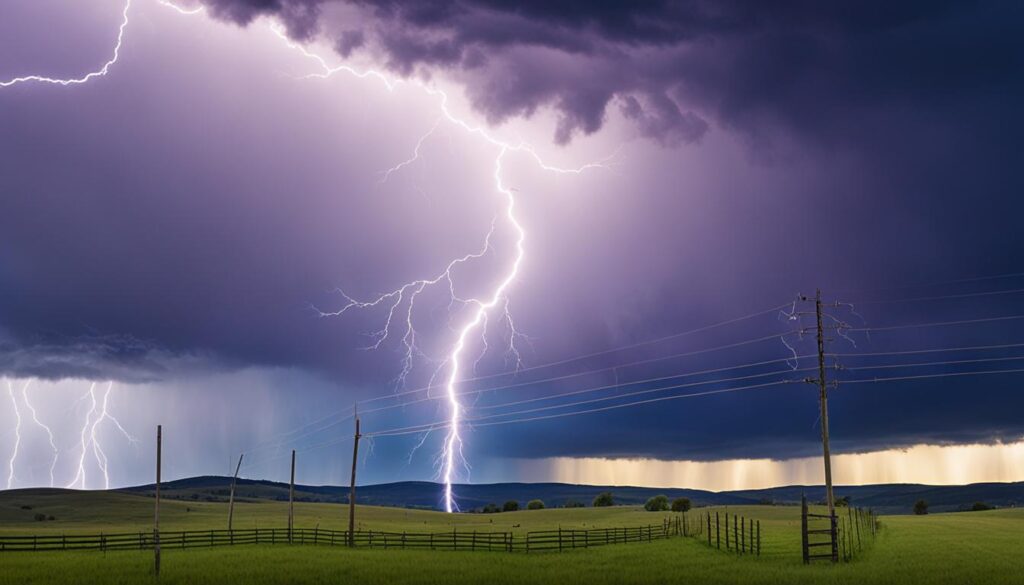
Overall, taking proper lightning safety precautions for your livestock is essential in safeguarding their well-being during electrical storms. By moving them indoors, preventing lightning strikes on trees, using metal feeding troughs, and ensuring insurance coverage, you can effectively reduce the risks associated with lightning strikes and better protect your livestock.
Conclusion
Protecting your electric fence from lightning damage is essential to ensure the safety and security of your livestock, farm, and ranch. By following the recommended steps and utilizing the best lightning arresters, electric fence lightning rods, and lightning strike protection devices, you can minimize the risk of lightning-related incidents and damage to your fence charger.
Installing lightning arresters is a crucial measure to safeguard your electric fence. Placing them on each corner of the fence, if possible, and keeping them at least 50 feet away from the energizer can effectively divert the energy away from the charger and direct it into the ground, reducing the risk of damage.
It is equally important to prioritize lightning safety for your livestock. Moving them to grounded buildings during severe storms and discouraging congregating under trees can help protect them from the harmful effects of lightning strikes. Additionally, consider using surge protectors and lightning diverters for maximum lightning strike protection for your electric fences.
Registering your chargers online and taking advantage of Zareba’s full lightning damage coverage under their warranties can provide additional peace of mind. By implementing these protective measures, you can ensure the safety and longevity of your electric fences, safeguard your livestock, and minimize the risk of lightning-related incidents and damage on your farm or ranch.
FAQ
What is a lightning arrester for an electric fence?
A lightning arrester for an electric fence is a device installed between the fence and the controller to protect the fence from lightning strikes. It diverts the energy away from the fence charger and directs it into the ground, reducing the risk of damage.
How many lightning arresters should I install on my electric fence?
It is recommended to install a lightning arrester on each corner of the fence, if possible. Keeping the devices at least 50 feet away from the energizer is also advisable.
What is a Storm Guard and how does it help protect my electric fence?
A Storm Guard is a device that can be added to a 1 joule or higher charger. It absorbs any lightning that bypasses other protective devices, providing additional protection for your electric fence.
Should I disconnect the energizer before a major storm?
Yes, if feasible, disconnecting the energizer before a major storm can enhance the protection of your electric fence against lightning strikes.
How does lightning damage an electric fence?
Lightning induces voltage onto the fence line, which can cause damage to various components of an electric fence, including the fence charger. Induced lightning can travel along the fence and seek a path to the ground with the least resistance.
Can lightning strikes on trees harm livestock?
Yes, intense storms and lightning strikes on trees can put livestock at risk. Cattle, for example, often seek shelter under trees during rain, making them more susceptible to ground current from a strike. It is advisable to move livestock indoors to grounded buildings during severe storms to protect them from direct strikes.
How can I minimize the risk of lightning strikes on trees in my pasture?
To minimize the risk of lightning strikes on trees, it is recommended to allow trees to grow in rows rather than clusters. Certain types of trees with large root systems are more prone to lightning strikes. Placing metal feeding troughs in low-lying areas instead of on hilltops can also reduce the risk.
How can I register my electric fence charger for lightning damage coverage?
To register your electric fence charger for lightning damage coverage, visit the manufacturer’s website and complete the registration process. Registering your charger is essential to be eligible for full lightning damage coverage under the manufacturer’s warranty.